GOVERNMENT THAT ACTUALLY WORKS
“Government is very good at doing everything, yet most often fixes nothing.” – Peggy
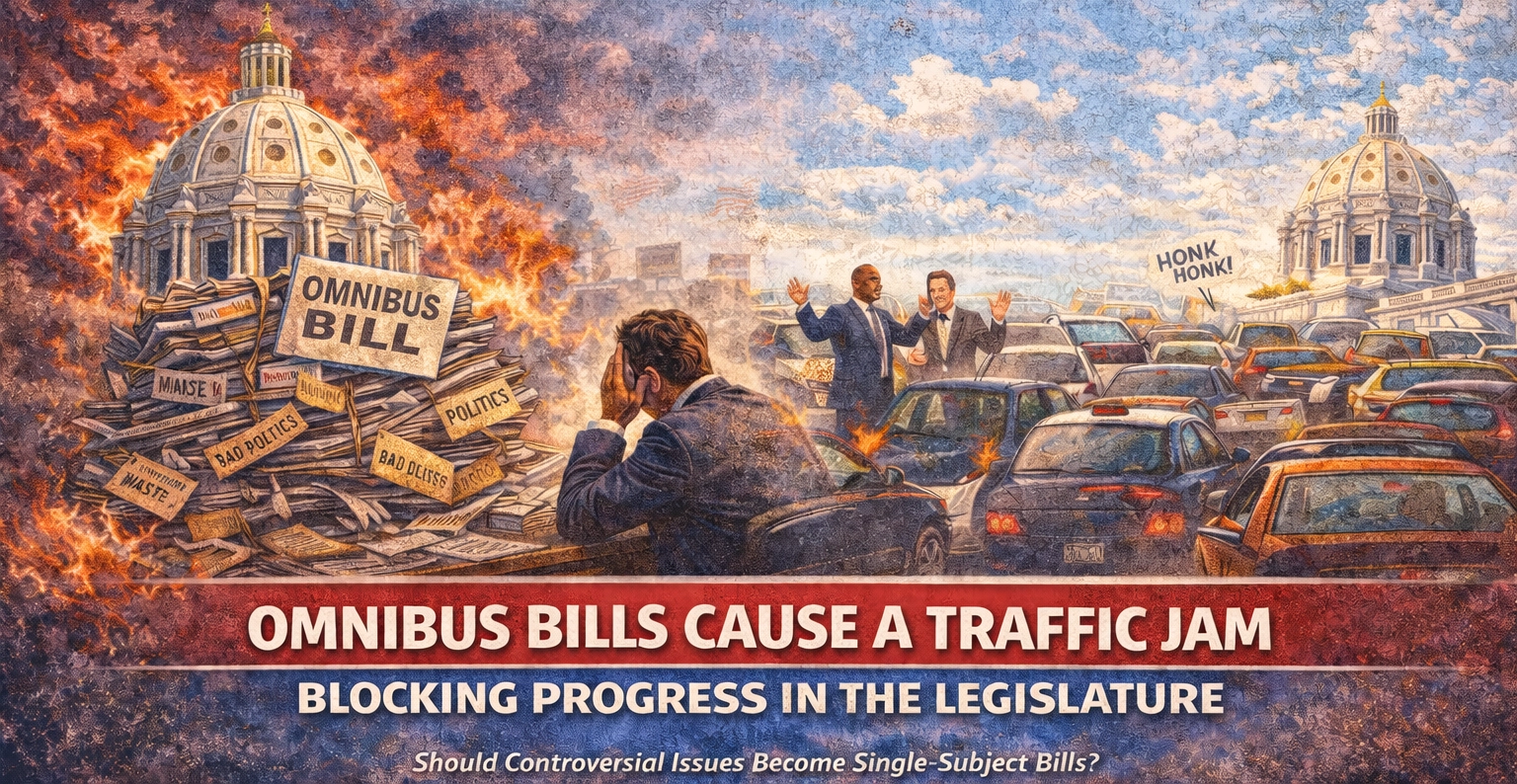
PROBLEM: Huge omnibus bills contain junk legislation that couldn’t pass on its own and cause gridlock in the legislature.
Omnibus bills, those giant bills full of a multitude of “good and bad” legislation typically under a specific subject, are a main cause of end-of-session gridlock in the legislature. The legislature has become a bill factory! These huge omnibus bills often contain bad or “poison pill” legislation that would never pass on its own and are anti-transparency by allowing legislators to hide their true votes on issues.
SOLUTION:
- As a governor, I will veto any omnibus bill that contains controversial legislation that should move forward as a single subject bill.
- I will propose legislation (which I’ve already authored as a legislator) that would alter the legislative committee process and force controversial issues into single subject bills before coming to the floor for a vote.
PROBLEM: Neglectful and fraud ridden government wastes billions of tax dollars, disrespects taxpayers, and hurts those who really need the help.
The ridiculously insane amount of fraud in our state that has been allowed to take place under this governor and the agencies he oversees is not just government dysfunction: it’s outright dereliction of duty. Whistle blowers have been ignored or penalized. Where is the accountability? We are now at billions in stolen taxpayer dollars and counting. No one really knows how much has been wasted.
Here’s just the tip of the iceberg concerning state fraud ridden programs: autism services, Medicaid billing, childcare assistance, child nutrition funds, addiction treatment, health services, and housing help programs. The list keeps growing. This is not only unfair to taxpayers, but also unfair to disabled and hurting children and adults who truly need the help.
SOLUTION:
- Support the creation of an Office of Inspector General outside of the jurisdiction of a governor or state agency to conduct independent investigations to detect and prevent fraud, waste, and abuse in state agencies and programs
- Agency employees who don’t do their jobs will be held accountable like any other employee in the private sector. There will be consequences for not doing one’s job.
- Create a volunteer team of successful small business owners who can help identify waste and inefficiency in state agencies that need change or elimination.
- Change in hiring practices: We should hire the best and most qualified people. The people of Minnesota deserve the best qualified and most effective people working for them in agencies based on skill, character, and experience.
PROBLEM: Too many government programs don’t work and never end
Smart government engages in smart funding. Taxpayers want their dollars spent on things that work and not throw money at things that don’t work. In my classroom, if something wasn’t working, I didn’t keep doing it over and over. Government shouldn’t do that either. Our state pays for more and add more programs, yet we get more – more homelessness, more drug addictions, more students who can’t read and do math, and poorer standards of living. It’s obvious that many current strategies are not working.
SOLUTION:
- Every state agency will start evaluating current government programs for effectiveness and report back to the legislature with recommendations on whether to continue or end a program. If a program is not effective, it should end.
- Require any new program or grant funded through legislation to have an automatic measurement component built in to track the effectiveness of the program. (Legislation I’ve authored.)
PROBLEM: Government agencies have become self-serving instead of people serving
Government agencies were intended to be focused on and responsive to the people and entities they serve, whether it be individuals, schools, businesses, farmers, etc. Instead, we now often see an adversarial relationship between government agencies and the public that’s built upon promoting fines and penalties, along with tons of red tape. Much of government has become self-serving and seems to be working against us rather than for us. This has become counterproductive and must change.
SOLUTION:
- Direct the primary focus of state agencies to be educational resources with subject matter experts who come alongside farmers, schools, businesses, nursing homes, etc. to educate and offer (not mandate) expertise and solutions. Unless it is a life-threatening issue or repeat problems, entities that violate regulatory laws will be met with educational options to help solve problems. Repeat or serious life-threatening offenses will have strict consequences.
- Every government agency will be focused on and responsive to the people and entities they serve – individuals, schools, businesses, farmers, etc.
- Every public serving agency will operate with customer service as a focus, offering customer satisfaction surveys after site visits, customer outreach, etc.
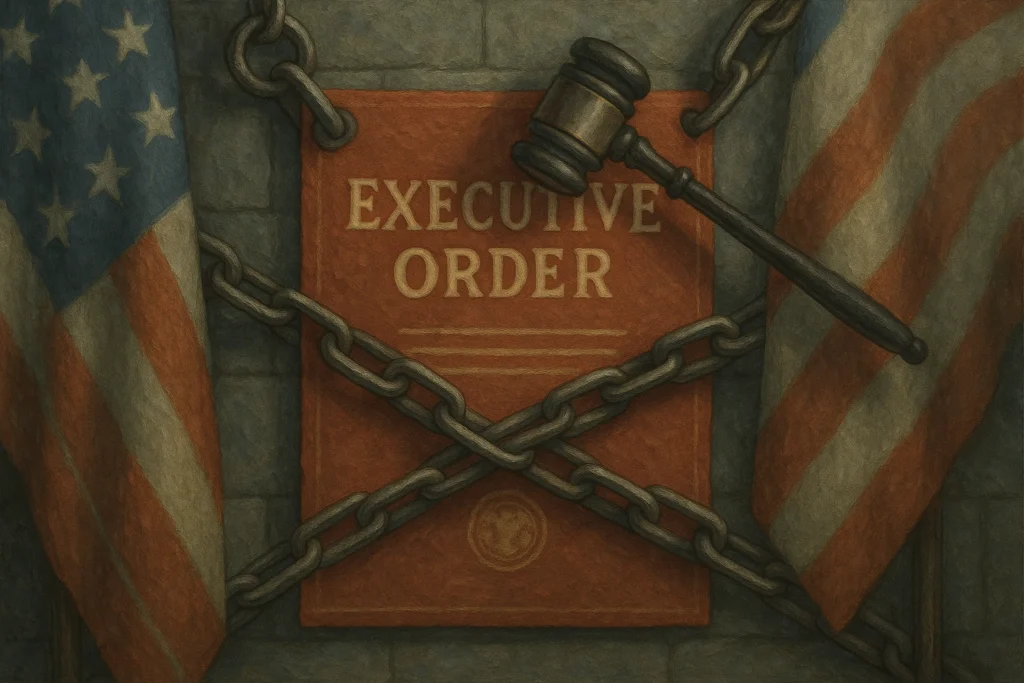
PROBLEM: Current Minnesota law contains loopholes that allow a governor to potentially abuse executive emergency powers and take sole power over the state by maintaining an endless state of emergency.
Minnesota’s emergency powers law was intended to allow a governor to quickly and decisively deal with a sudden state emergency – for example, to address a flood or other natural disasters. The legislature, by nature, is a slow and deliberative body, and is not in session year around. It’s unable to act when speed is of essence. Unfortunately, Minnesota’s emergency powers statute leaves openings for a governor to maintain sole power over the state for months on end, leaving out the legislature and the voice of the people. No governor – whether Republican or Democrat – should be given that much power. A commonsense solution should leave short-term emergency powers within the executive branch so as not to hamper our state’s ability to respond quickly to state emergencies, but balance that by dictating strong parameters on those powers through the legislature.
SOLUTION:
- Enact legislation that would allow a governor to declare a short-term state of emergency for up to seven days. Any extension of the emergency after that would require the legislature to take control and affirmatively approve the state of emergency, as well as continue to affirmatively approve these executive powers every thirty days. This would give a governor the ability to act swiftly in an emergency while bringing balance by requiring the support of the legislature to continue.
PROBLEM: Government spending in Minnesota has grown exponentially over the last decade.
Our state budget went from $35.5 billion in 2014 to an estimated $64.9 billion in 2024 – an 83% increase in ten years! Just this last biennium, the legislature added so many new spending programs and new government agencies to fund, while core government responsibilities like nursing homes, ambulance access, roads and bridges, etc. were left floundering. I recently attended a public feedback forum for nursing homes and heard about the very same budgetary problems that I was hearing ten years ago. Nothing has changed!
SOLUTION:
- Government needs to stop trying to do everything and attempting to solve every problem under the sun and start prioritizing. We must smartly, effectively, and compassionately focus state spending and efforts on core government responsibilities like nursing homes, making sure our kids can read proficiently, and road infrastructure. If we cannot properly fund core state responsibilities, we have no business funding things like expensive trains, menstrual products in bathrooms, and free electric bikes and snowblowers. Let’s be the adults in the room for a change!
PROBLEM: Minnesota’s lax election laws create loopholes for fraud. This has created distrust in our election system and led to citizen anger and division.
Everyone, no matter what political party, should come away from an election feeling like it’s a fair election. Any amount of election fraud is an attack on democracy because every fraudulent vote takes away someone else’s legitimate vote. Right or wrong, if the perception is there that a vote doesn’t count, it creates anger and erodes trust. We must put into place measures that regain this trust.
SOLUTION:
- Require voter ID at polling places to ensure every vote cast is by an eligible voter and citizen, a commonsense policy already in place in 36 states. Photo IDs are required for many things in Minnesota, including buying cigarettes, cashing a check, boarding an airplane, receiving food stamps, and purchasing a fishing license. It’s time to require one for elections too.
- Require regular audits and verification of the Statewide Voter Registration System to ensure that only eligible voters remain on the voting rolls.
- Implement provisional balloting. This gives election officials time to verify a voter’s eligibility before their vote is counted – something all but two states do.
- Shrink the voting window. Minnesota’s lengthy voting is currently the longest in the nation.
- Require a valid vote backup to create a way to verify the vote if needed.
PROBLEM: Minnesota does not have term limits for its state legislators (House and Senate) or its governor. Officials can serve indefinitely if re-elected. Though there are pros and cons for setting term limits, I believe reasonable term limits can be a way to improve the effectiveness of government.
Our founding fathers created a wise plan for a citizen-led government and never intended for elected positions to become careers. There are pros and cons to term limits. Those in support say term limits would ensure continued fresh perspectives for our elected offices, allow for more citizen engagement, decrease lobbyist influence, and prevent entrenched power. Those against term limits will argue that long-serving members can decrease the power of lobbyists and legislative staff and can gain valuable expertise that enhances their ability to lead. Those in opposition would argue that the voters should be the ones who decide if they want to re-elect effective representatives and should not be inhibited by term limit requirements. Both have valid arguments.
I have served with House members who have only held office for two years and, on the other end of the spectrum, have served for over 45 years. I believe at some point, this becomes an abuse of the system. My proposal below finds a “happy medium” that allows ample time for office holders to develop and utilize the experience and understanding necessary to do a good job serving our communities and state. At the same time, it would inhibit the development of career politicians – something our country’s founders ever intended – and bring more opportunity to the many great individuals and untapped leadership potential in our local communities.
The Minnesota Constitution must be amended to enact term limits.
SOLUTION:
- Introduce a bill for term limits requiring that no person may serve more than 20 years in the Minnesota Legislature – the House, Senate, or a combination of the two. In addition, no person could serve more than 2 four-year terms as governor, lieutenant governor, state auditor, attorney general, or secretary of state. Terms ending before or in the current year would not be counted.
- If the bill is approved, language would be presented to voters during the general election that would read: “Shall the Minnesota Constitution be amended to place limits on the terms of office of state legislators and executive officers?”
PROBLEM: The new Paid Family and Medical Leave program sounds good on the surface, but “the devil is in the details.” The program is ripe for fraud (who gets to pay for that?) and it’s going to decimate many nursing homes, schools, small businesses, and local governments. It will hurt the very workers it was designed to help.
Minnesota’s new Paid Family and Medical Leave program is set to start in 2026. This program is hugely expensive. It was given $1 billion for start-up money (from the $18 billion surplus), yet they’ve already had to increase the payroll tax an additional 37% even before the program started. The payroll tax is projected to increase again.
It is extremely concerning that this program is ripe for fraud abuse. It’s set up to very likely become Minnesota’s next program that thieves and fraudsters will abuse and perhaps one of the biggest “fraud monsters” of them all. Minnesota has already lost billions to fraud. We cannot afford more.
A mammoth new 400 employee state agency has been created to run this program which taxpayers will now have to fund into perpetuity. This bureaucracy will collect the payroll tax, suck up a ton of money for bureaucratic administration, and then give what’s left to the workers. If this was a charity, most people would not give their money to it, yet as a state we are now all forced into this program.
Equally concerning is the impact this program will have on our local businesses, and the already strained budgets of schools, cities, and counties. Property taxes for schools and local governments will have to increase even more to pay for this unfunded mandate. Tightly strained budgets and staffing shortages in schools, childcare, and nursing homes will be strained even more, especially in rural areas. Why would we add more stress to these necessary institutions when many are already closing, and how much more can local property taxpayers take?
Workers will lose their jobs and communities will lose precious businesses. Small businesses, especially in rural areas where they do not have the employee backup or temp employees even available – will be decimated. This will hurt the very workers it was meant to help.
Minnesota businesses are in trouble. We keep piling onto our employers and expect them to stay in our state. It has come to the point where businesses cannot absorb anymore and are starting to close or leave. This is a misguided, shortsighted, and expensive government program with the largest list of unintended destructive consequences that I’ve ever witnessed.
SOLUTION:
- The Paid Family and Medical Leave program holds way more harm for our state than good. It must be fully repealed. As governor, I will be open to exploring private pay alternatives to meet the needs of workers and employers which don’t involve a massive new government agency, forced payroll deductions, or intensive oversight – and will not be a fraud magnet.
Other Topics
Make Your Voice COunt!
Your voice matters—and it can help shape the future of Minnesota. By getting involved or supporting our efforts with a contribution, you’re standing up for honest leadership, common-sense solutions, and a state that truly works for its people. Together, we can bring real change to Minnesota.