Affordable Living That's Attainable
“When young adults can’t afford to buy a car, a home, or to have children and when seniors can’t afford to live on their fixed incomes, that’s a big problem. People deserve to see a tangible difference in their ability to afford everyday life.” – Peggy

Note about affordability: Economic anxiety is real. People want change. They’re feeling desperate and frustrated and out of touch with the American dream. We must utilize smart capitalism where the laws are made by a government that serves the people and where the rules are made by the legislature and for the people – not “crony capitalism” where big investment entities control both the laws and the money. Manipulating the market with huge subsidies or more regulations is not the answer. That just causes a new set of problems. The government’s role should be to set the parameters of a market. It’s like setting the rules on a school playground and then allowing everyone to play on the playground together.
Problem: Property taxes are pricing people and businesses right off their own property.

State aid for counties and cities (LGA) and state funding for local schools continue to rise, and yet so do property taxes. Most property taxes throughout the state are set to increase 10-20% in 2026. Wonder why? County commissioners, city council, and school board members will tell you why: one of the biggest drivers of increased property taxes are unfunded or underfunded state and federal mandates – about 65-74% of county costs are state mandates. Many are unfunded. State laws, such as mandating specific social services spending or paperwork requirements, waste and pollution control mandates, or requiring schools to pay summer unemployment for nine-month contracted employees, are all “hidden taxes” that result in increased property taxes and/or fees.
A major cause for the extreme rise in local property taxes is unfunded state mandates on cities, counties, and schools. State laws, such as mandating specific social services spending or paperwork requirements, waste and pollution control mandates, or requiring schools to pay summer unemployment for nine-month contracted employees, are all “hidden taxes” that result in increased property taxes and/or fees.
MPCA regulations place unnecessary burdens on businesses, particularly in the agricultural sector. We need to bring back balance.
SOLUTION:
- Eliminate all unfunded state mandates on cities, counties, and schools. If the state doesn’t fund it, it can’t mandate it.
- As a governor, I will not sign legislation that contains unfunded mandates that have significant economic impact on local governments and their citizens.
PROBLEM: state agency rulemaking – more hidden taxes

Unelected bureaucrats in agencies can force expensive new mandates – hidden taxes – through rulemaking, raising the cost of local governments by millions of dollars and skyrocketing local property taxes and fees. Case in point: the Albert Lea wastewater treatment plant was initially estimated at $40 million for basic upgrades but doubled to $80 million after the MPCA implemented new phosphorus guidelines. This unfunded mandate will cause sewer rates for residents to double or triple.
SOLUTION:
- Require that any agency rulemaking mandate should that increases local costs more than a certain percentage of local income must go through the legislature for approval.
- The state should have skin in the game. If passed by the legislature or required by agency rulemaking, the state must pay a percentage of the cost and allow cities to have time to comply.
PROBLEM: Minnesota is experiencing an increasing amount of wealth migrating out of our state among individuals and businesses, putting the fiscal viability of our state in jeopardy.
Bureau of Labor Statistics shows that, since 2020 our metro job market has lost more jobs than it gained. In just three years (2022-2024) more people moved out of our state than moved in, resulting in a net loss of $5 billion of Minnesota wealth. This began in 2013 when the highest in the nation 4th tier income tax was implemented and continued as Minnesota has become among the top taxing states in the nation for individual, corporate, capital gains, commercial property taxes, and estate taxes. We can’t just keep passing tax increases and expect people and businesses to stay here or come here. How will we fund important state responsibilities like education, nursing homes, roads and bridges if we drive wealth and business from our state?
SOLUTION:
- Completely eliminate Minnesota’s tax on Social Security.
- Minnesota is no longer competitive with the states around us. More people continue to move out of our state. We need to make our state tax system so it’s competitive with other states around us or we will lose our advantage. I will work with the legislature to make Minnesota competitive with the states around us. Something that works for us. If we don’t get competitive, we will fail and all our programs will hurt.
- One of my first steps as governor will be to form a think tank of Minnesota business leaders with the task of forming a plan on how to make Minnesota more competitive with other states.
PROBLEM: The price of housing is causing home ownership to become next to impossible for most people.
The median age for owning a first home for my generation in the 1980s was 29 years old. For the current generation it is 38 years old. Most young adults in this generation will not be able to afford to own their first home until they’ve lived about half of their life. This is unfair and unacceptable. There are several issues playing into the unaffordability of housing, including construction supply shortages, labor shortages, and high interest rates. But one of the main drivers is excessive local, regional, and state regulations and fees. In the Twin Cities, up to one-third of a new home’s price is due to regulations and fees. To build a new home in Victoria, MN costs 25% more than the same home in the SW Chicago suburbs — to the tune of $82,000 more.
We must eliminate ridiculous regulations that make it impossible to build. Excessive government regulation and lengthy permitting processes at all levels are out of balance for the housing industry. We must find a commonsense balance with regulations and construction fees. They are driving up building costs exponentially. We have gotten to the point where we are regulating simply for the purpose of regulating and have lost sight of the purpose. State regulation must be reasonable and balanced. Minnesota’s is neither. Let’s “make it legal” to build affordable housing in Minnesota again!
SOLUTION:
The median age for owning a first home for my generation in the 1980s was 29 years old. For the current generation it is 38 years old. Most young adults in this generation will not be able to afford to own their first home until they’ve lived about half of their life. This is unfair and unacceptable. There are several issues playing into the unaffordability of housing, including construction supply shortages, labor shortages, and high interest rates. But one of the main drivers is excessive local, regional, and state regulations and fees. In the Twin Cities, up to one-third of a new home’s price is due to regulations and fees. To build a new home in Victoria, MN costs 25% more than the same home in the SW Chicago suburbs — to the tune of $82,000 more.
We must eliminate ridiculous regulations that make it impossible to build. Excessive government regulation and lengthy permitting processes at all levels are out of balance for the housing industry. We must find a commonsense balance with regulations and construction fees. They are driving up building costs exponentially. We have gotten to the point where we are regulating simply for the purpose of regulating and have lost sight of the purpose. State regulation must be reasonable and balanced. Minnesota’s is neither. Let’s “make it legal” to build affordable housing in Minnesota again!
PROBLEM: Minnesota’s energy costs are becoming increasingly unaffordable, and our grid is now at imminent risk for dangerous rolling blackouts.

Over two short decades, Minnesota has gone from among the least expensive energy prices in the nation to now in the top ten most expensive, driving up the cost of every product, farm foods, and home energy bills. Even worse, grid operators warn us that our state is at high risk for blackouts – inconvenient for some states; life threatening in Minnesota. Minnesota’s unbalanced and unwise energy goals have pushed our state into the danger zone in both consumer costs and life itself.
SOLUTION:
- Utilize Minnesota’s reliable, low-cost coal plants until 2040 or beyond while building new clean nuclear power to gradually replace them.
- Allow renewable development to include building more reliable natural gas capacity.
- Put a moratorium on closing anymore energy viable assets in the state – retain or mothball. These are already bought and paid for, transmission lines available, and for and are a perfect bridge to the future.
- Allow for a diversified energy portfolio to provide reliable, clean, and affordable electricity. The answer to lower energy prices is increased reliable energy production.
- Allow for exploration and responsible use of geologic hydrogen (naturally occurring hydrogen found beneath the Earth’s surface) which is another potential Minnesota clean energy resource.
- Continue the energy rebates for cost efficient strategies through local utility companies (water heaters, appliances, insulation, etc.)
PROBLEM: Childcare shortages and unaffordable costs are forcing many parents who want to work to choose between staying at home to take care of their child or going to work. Companies have trouble attracting and retaining working parents.

Childcare is extremely expensive and in short supply – especially in Greater Minnesota – causing great stress upon families and the economy. This is a nationwide issue, but Minnesota is experiencing much worse. For example, our state ranks among the most expensive states for infant care, costing more than a college education.
Much of Minnesota’s childcare shortage and high costs are driven by an excessive state regulatory environment – for example, strict child-staff ratios, hiring requirements, and wacky penalties for things like “prickly grass” (happened in Albert Lea!) or a water heater one degree higher than the maximum allowed. We obviously need some regulations to ensure safe and quality childcare, but Minnesota is way out of balance. Most research shows that stringent staff-child ratios, group size limits, and hiring requirements have little to no effect on childcare quality – but it sure does drive providers out of business and drives workers away from childcare jobs.
SOLUTION:
- Make the primary focus of Department of Children, Youth, and Families (as well as county regulators) to be an educational resource, providing experts to come alongside childcare providers to educate and offer expertise and solutions and help fix issues. Repeat or serious life-threatening offenses will bring strict consequences.
- Reduce Minnesota’s higher than average staff-child ratios and group size limits to better align with neighboring states and national averages.
- Bring common sense and balance to Minnesota’s childcare provider hiring requirements by eliminating all but age and on-the-job training requirements for childcare workers. Allow childcare centers to hire anyone over 16, provided they undergo some training – including early childhood development – before working with children.
- Place state funding emphasis on early learning scholarships rather than direct subsidies to providers. Parents deserve to choose the childcare setting – center, school, or family-based childcare – that best fits the unique needs of family and child. Competition for parent satisfaction gives incentive to increase quality, and opportunity for fraudulent use of state dollars becomes less.
PROBLEM: Farming has become insanely expensive and overcontrolled, making it impossible for many farmers to remain in the business and new farmers to enter.

Agriculture is a critical part of Minnesota’s economy. Most farmers are among the best ecological land managers – they care about the land and the environment, and they want to pass it on to the next generation better than they found it. Overzealous agencies (and lawmakers) are creating a myriad of new rules that take away tools from farmers’ toolboxes that help them be more efficient and productive, as well as protect the environment.
One recent concern is the increasing amount of Ag land being purchased by foreign companies, large investment conglomerates, or megarich individuals. If we don’t figure out how to prevent this corporate takeover, these entities could ultimately control most of our farmland where the real farmers will just be “serfs” on the land with little say in what and how they farm. We recognize the negative effects in the housing market with big investment conglomerates buying up large numbers of single-family homes to turn into rentals. We must recognize and address this problem with farmland as well before it’s too late.
SOLUTION:
- Reform state agencies to be an educational resource instead of dictating one-size-fits-all solutions and penalties. Agencies would come alongside farmers to help educate them on how to comply with rules instead of being heavy-handed penalizing authorities. Repeat or serious life-threatening offenses will bring strict consequences.
- “Freedom at the pump” for ethanol. Find ways to get more blender pumps at gas stations. Ethanol should have the right to compete in the market. Let consumers drive the market and decide what works best for them.
- Seek ways to reasonably legislatively limit the amount of farmland that foreign companies, large investment conglomerates, or megarich individuals without harming family-owned corporate farms.
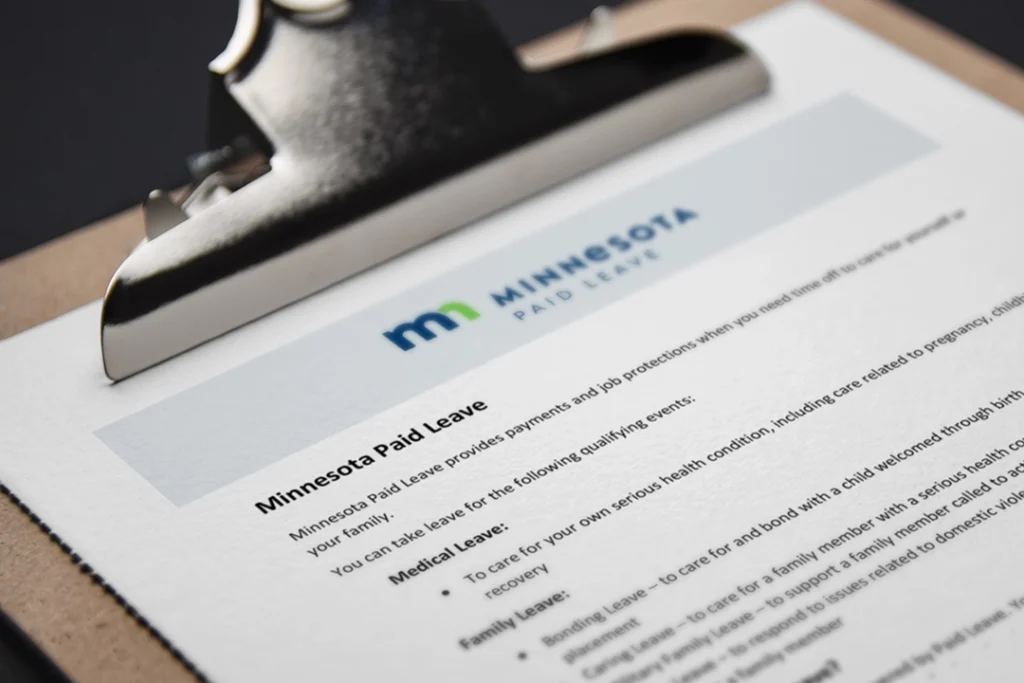
PROBLEM: The upcoming Paid Family and Medical Leave program (2026) sounds good on the surface, but “the devil is in the details.” It will decimate many childcare centers, schools, small businesses, local governments, and hurt the very workers it was designed to help.
Minnesota businesses are in trouble. We keep piling onto our employers and expect them to stay in our state. It has come to the point where businesses cannot absorb anymore and are starting to close or leave. Workers will not have jobs and an important tax base will not be here to fund important state programs.
Minnesota’s new Paid Family and Medical Leave program is set to start in 2026. The upcoming regressive payroll tax (with workers at the lowest levels paying the highest percentage of their income) has already been increased 37% before the program rollout. It creates a mammoth new government agency with hundreds of additional employees that we taxpayers will have to fund into perpetuity, and the system is ripe for fraud. Even more concerning, already tightly strained budgets and staffing shortages in schools, childcare, and nursing homes will be strained even more. Why would we add more stress to these important institutions when many are already closing? Local governments will most certainly have to raise already horrendously high property taxes to pay for this expensive unfunded mandate. Small businesses – especially in rural areas – will be decimated. Workers will lose their jobs and communities will lose precious businesses.
Why would we create a new agency that eats up most of the money? They collect the payroll tax, use up a large amount in bureaucracy administration, and give what’s left to the workers. If this was a charity, most people would never give their money to it. Yet as a state we are all now forced into this program. This is a misguided, shortsighted, and expensive government program with the largest list of unintended destructive consequences that I’ve ever witnessed.
SOLUTION:
- The Paid Family and Medical Leave program holds way more harm for our state than good. It must be fully repealed. As governor, I will be open to exploring private pay alternatives to meet the needs of workers and employers that won’t involve a massive new government agency, forced payroll deductions, or intensive oversight.
Make Your Voice COunt!
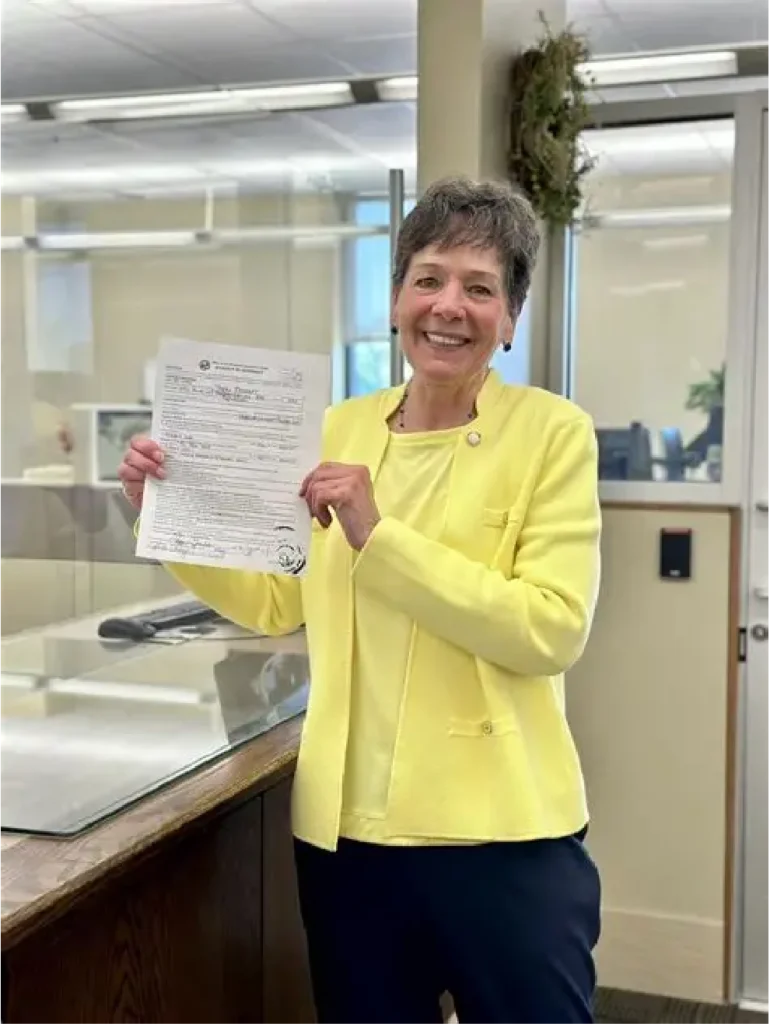
Your voice matters—and it can help shape the future of Minnesota. By getting involved or supporting our efforts with a contribution, you’re standing up for honest leadership, common-sense solutions, and a state that truly works for its people. Together, we can bring real change to Minnesota.